
Low Platform Vertical Injection Molding Machine
VERTICAL CLAMPING · VERTICAL INJECTION · YH-250-V-LH
High platform → low working platform
Many conventional large vertical injection molding machines use a clamping layout that places the mold working area relatively high. For applications requiring frequent manual insert loading, part removal, or mold access, this working height can become an important production-line consideration. This machine adopts the two-platen concept from horizontal machines and rearranges the clamping unit and machine base to bring the working platform down — so insert loading, part removal, and mold changes happen closer to a natural operating height.
Send an InquiryISO 9001:2015 | 40+ Years of Manufacturing
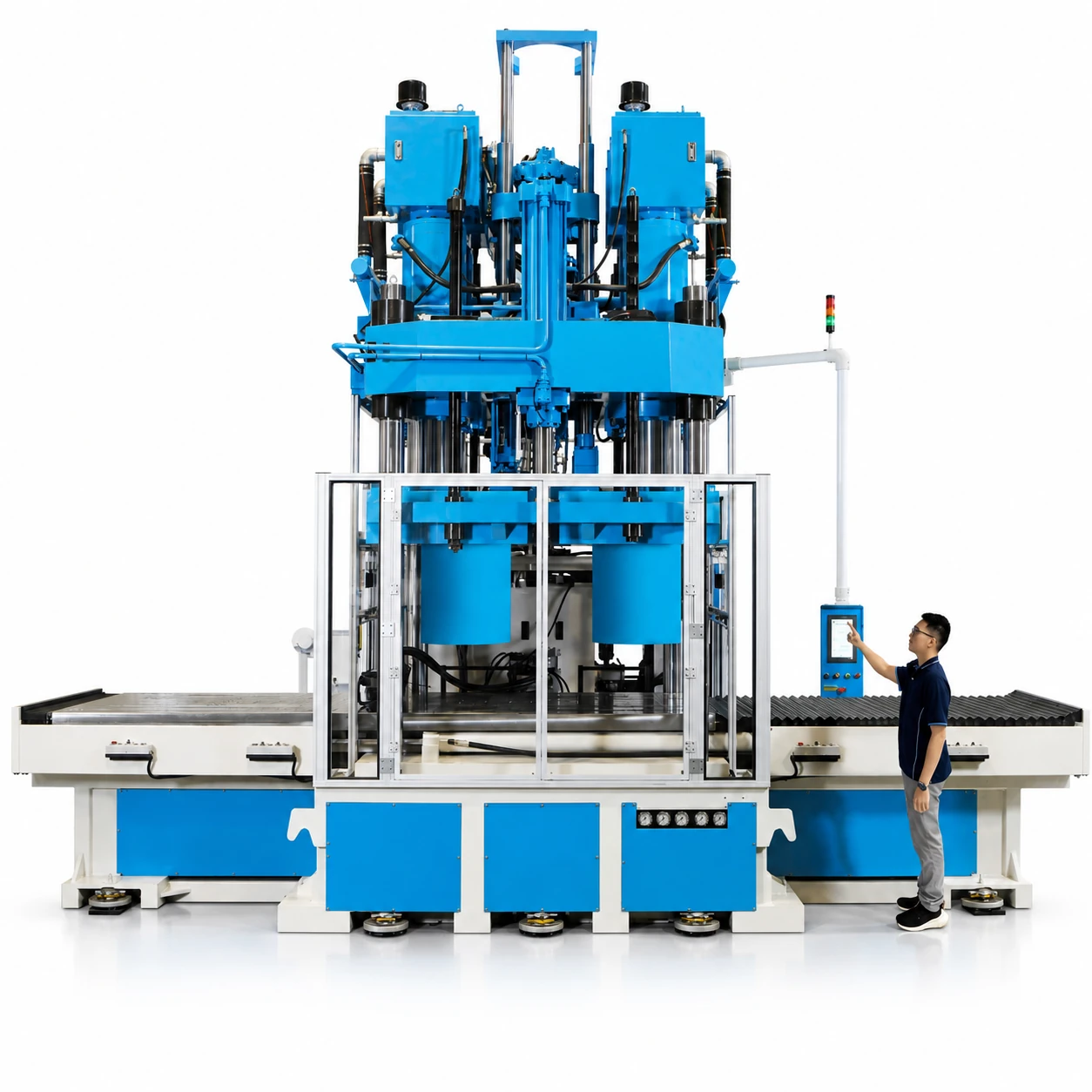
Why Rethink Working Platform Height
On production floors where operators load inserts, remove parts, or work on the mold by hand, working platform height directly affects ergonomics and ease of operation. When operators have to bend or stand on tiptoe for long periods, efficiency suffers and fatigue builds up over time; some plants even install raised platforms, which introduces additional safety risks.
With a lower working platform, operators can place inserts and remove parts without climbing or using raised platforms; and when the line integrates robots or conveyors, peripheral equipment no longer needs extra elevation to match an overly tall machine — the overall layout stays simpler.
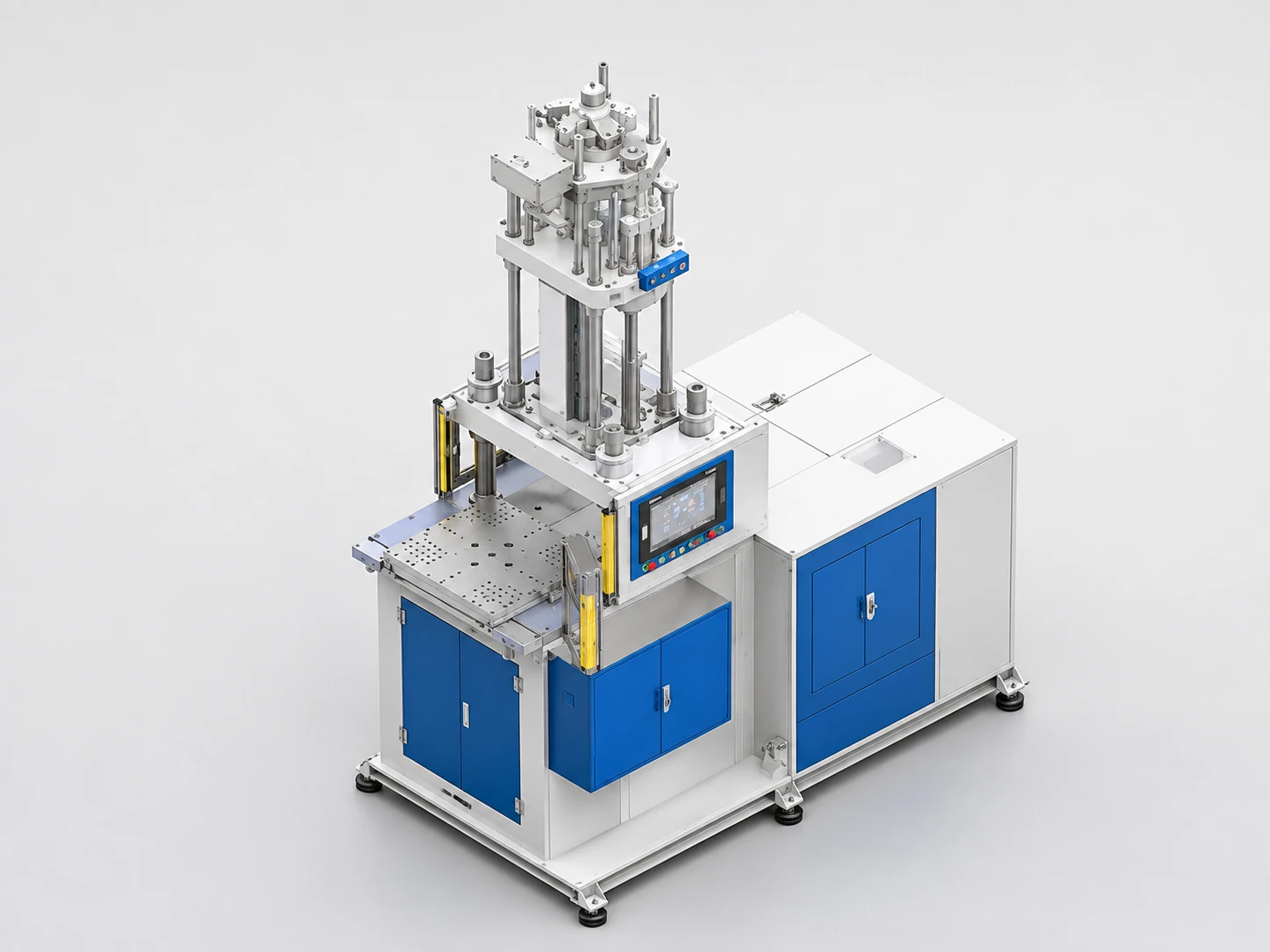
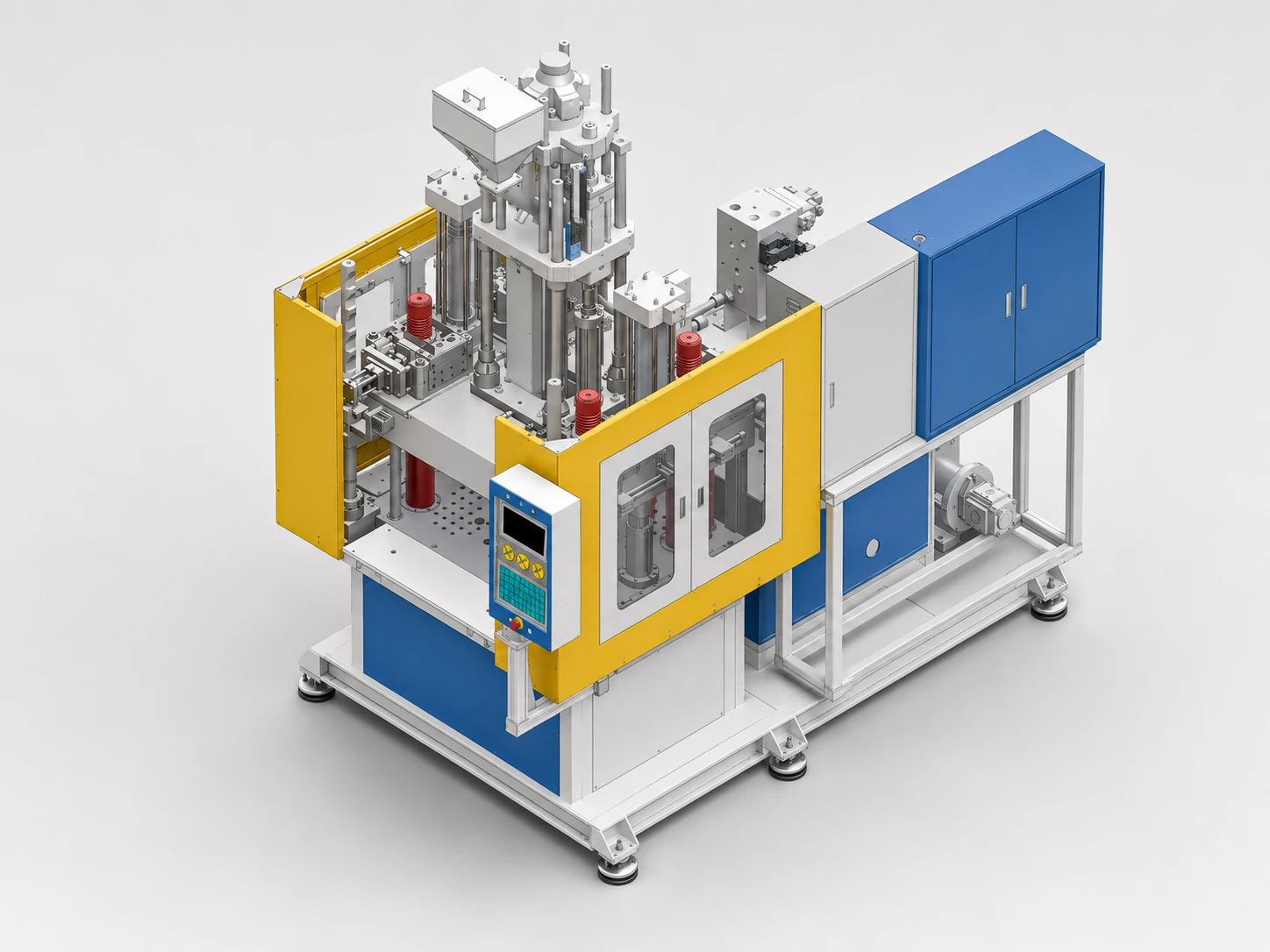
How the Structure Changed
01 Redesigned Structure
Adopts the two-platen concept from horizontal machines, simplifying the conventional three-platen configuration. Four clamping units provide stable clamping force during injection, with the clamping unit integrated into the machine structure.
02 Low Working Platform
The working platform sits lower, so operators do not need to reach high when loading and unloading, placing inserts, or working on the mold.
03 Ergonomic Operation
Designed around actual operating needs: a lower working height helps reduce operator workload and makes mold installation easier and safer.
04 Adjustable Opening Stroke
The redesigned clamping layout allows the opening stroke to be configured for taller molds without requiring the working platform to be raised accordingly.
Why Not Vertical Clamping with Horizontal Injection?
Another common way to lower the working platform is to pair vertical clamping with horizontal injection. This does bring the platform down, but injection then enters from the side of the mold: the cold runner and sprue path become longer, placing more constraints on mold design and part geometry. A hot-runner system can reduce or eliminate the additional cold-runner length, but it increases mold complexity and cost and introduces additional temperature-control and sealing considerations.
The low platform vertical injection molding machine keeps both vertical clamping and vertical injection — gaining a low working platform without these trade-offs.
Conventional Platform vs. Low Working Platform
Compared at the same clamping tonnage.
| Item | Conventional platform | Low working platform |
|---|---|---|
| Operator access | More reaching may be required | Reduced working height improves access |
| Manual insert loading | Access depends more heavily on machine height | Better suited to frequent manual loading |
| Mold installation | Working height can make mold changes more demanding | Lower working height makes mold changes easier |
| Operator fatigue | Prolonged reaching may increase fatigue over time | Lower working height helps reduce fatigue |
| Mold-change safety | Working at height may require additional precautions | Lower access height supports safer mold changes |
| Automation integration | Peripheral equipment may require additional elevation | Lower transfer height can simplify peripheral layout |
| Factory ceiling height | Taller machines may require more headroom | Overall machine height can be reduced |
| Large molds | Opening distance may be limited by the standard stroke | Opening stroke can be configured for taller molds |
Swipe horizontally to view the full table
Suitable Products & Applications
Particularly suitable for molding work that involves manual insert loading.
Automotive
Automotive glass edge encapsulation, seat-belt buckles, seat spring connectors.
Bicycle & Motorcycle
Pedals, seat support encapsulation, handlebars.
Industrial & Optical
Motor rotors, coils, snow goggles, swim goggles, large protective goggle encapsulation.
Typical Scenarios
Issues It Helps Address
Common Materials
- General thermoplastics
- Engineering thermoplastics
Special Material Configurations
- SiliconeSubject to dedicated injection and feeding configuration
- BMCSubject to dedicated material handling and injection configuration
Actual material suitability should be evaluated case by case, considering appearance requirements, strength requirements, and production stability.
Selection Guide
A Lower Platform Is Not Always Better
If the platform is too low, operators may end up bending over more instead. A suitable design has to weigh the following factors together.
Mold Height
The height of the mold itself directly affects the actual pick-up position.
Operator Height & Pick-up Position
Should be evaluated against the actual operators on your line.
Safety Door Height
Must satisfy safety regulations while preserving operating visibility.
Maintenance Accessibility
Service space for future maintenance should be considered from the start.
Share your product type, mold size, and how your line operates — we will help evaluate a suitable configuration.
Send an InquirySpecifications
This page lists the specifications of the YH-250-V-LH model so you can check whether its injection and clamping capacity meets your production needs. Working platform height is a configuration item — it is planned according to product type, mold conditions, and automation requirements. Share your production conditions and we will provide a recommendation.
Specifications of the YH-250-V-LH model. For other tonnages, please contact us.
| Item | Unit | Value |
|---|---|---|
| Screw Diameter | mm | Ø44 |
| Injection Pressure | kg/cm² | 1550 |
| Injection Capacity | cm³ | 273 |
| Max. Injection Weight (P.S) | gr | 246 |
| Max. Injection Weight (P.S) | oz | 8.6 |
| Injection Rate | cm³/sec | 109 |
| Injection Speed | mm/s | 72 |
| Clamping Force | tf | 250 |
| Clamping Stroke | mm | 400 |
| Max. Open Distance | mm | 800 |
| Min. Mould Height | mm | 400 |
| Hydraulic Ejector Force | tf | 4.5 |
| Ejector Stroke | mm | 100 |
| Drive Motor | kw | 45KW |
| Heater | kw | 9 |
| Oil Tank Capacity | L | 650 |
| Dimension Of Machine (L x W x H) | m | 2 x 3 x 3.2 |
| Weight Of Machine | T | 9.4 |
※ Specifications are subject to change without notice. Please refer to the official specification sheet.
Why Huarong Group
40+ Years of Manufacturing
Three brands — Huarong, Nan Rong, and YUHDAK — covering horizontal, vertical, and multi-component machines.
Technical Integration
Mechanism design, process implementation, and equipment pairing — more than just a single machine.
Application Evaluation
Starting from your product requirements, we evaluate technical feasibility and plan the implementation.
Automation Integration
Peripheral automation equipment can be integrated according to your production line needs.
Full Support, from Technology to Production
- Technical Evaluation
- Equipment Configuration
- Process ImplementationMold trials, parameter optimization, production stabilization
- Long-term SupportTraining, technical consultation, automation upgrades
FAQ
Why do many conventional vertical injection molding machines have a high working platform?
Many conventional large vertical injection molding machines use a clamping layout that places the mold working area relatively high. On floors that involve manual insert loading, part removal, or mold work, operators may need to bend or stand on tiptoe for long periods — efficiency suffers and fatigue builds up; some plants even install raised platforms, which introduces additional safety risks.
What is the working platform height?
The working platform height is not listed in the standard specification table — it is a configuration item. The actual height is planned according to product type, mold conditions, and whether automation is integrated, so operators can place inserts without climbing and robots do not need extra elevation. Share your production conditions and we will provide a recommendation.
How is this different from vertical clamping with horizontal injection?
Vertical clamping with horizontal injection can also lower the platform, but injection then enters from the side of the mold — the cold runner and sprue path become longer, placing more constraints on mold design and part geometry. A hot-runner system can reduce or eliminate the additional cold-runner length, but it increases mold complexity and cost and introduces additional temperature-control and sealing considerations. The low platform vertical injection molding machine keeps both vertical clamping and vertical injection, gaining a low working platform without these trade-offs.
Which products and applications is it suitable for?
It is particularly suitable for molding work that involves manual insert loading — for example metal insert molding, terminals and connectors, cable overmolding, and production with frequent manual loading and unloading. Typical fields include automotive, bicycle and motorcycle, and industrial and optical products. To confirm suitability, share your product type, mold size, and how your line operates, and we will help evaluate.
Is a lower working platform always better?
No. If the platform is too low, operators may end up bending over more instead. A suitable design has to weigh mold height, operator height and pick-up position, safety door height, and maintenance accessibility together.
Wondering Whether a Low Platform Vertical Machine Suits Your Product?
Whether you are evaluating new equipment, reviewing ergonomics on your production floor, or looking to improve efficiency, our engineering team can help clarify your needs and find a suitable technical approach.
Send an InquirySend an Inquiry
Complete the form below and our engineering team will contact you as soon as possible.
Thank You for Your Inquiry
Thank you for your inquiry. Our engineering team will contact you as soon as possible.
※ The specifications on this page are for the YH-250-V-LH model and are subject to change without notice. Please refer to the official specification sheet for the final configuration.