
Microcellular Foam Injection Molding
HRF SERIES | PHYSICAL FOAMING TECHNOLOGY
Flagship Model: HRF-200 (200 tons)
Helps reduce sink marks and warpage while improving dimensional stability — PCR-compatible (material validation required).
Send an InquiryPatent M659181 | ISO 9001:2015 | 40+ Years of Manufacturing Experience
HRF200_物理微發泡.webp)
What Is Microcellular Foam Injection Molding?
Microcellular foam injection molding precisely introduces a supercritical fluid (SCF), typically nitrogen (N₂) or carbon dioxide (CO₂), into the polymer melt. As the melt enters the mold cavity, uniformly distributed microcells form throughout the part. These cells are typically 5 to 100 micrometers in diameter and occur at high density, reducing part weight, improving dimensional stability, and lowering material consumption without significantly compromising structural function.
Huarong Patented Microcellular Foaming System — M659181
Physical Foaming Injection Unit for Injection Molding Machines
Process Principle
- 1 SCF Injection N₂ or CO₂ is injected into the polymer melt
- 2 Gas Diffusion The gas is broken up and dispersed through screw mixing, diffusing evenly into the melt to form a single-phase solution.
- 3 Cell Nucleation A rapid pressure drop during mold filling initiates cell formation within the polymer
- 4 Solidification The polymer solidifies into a lightweight part with stable dimensions
Key Benefits
Dimensional Stability
Reduces uneven shrinkage, warpage, and sink marks, making the process especially suitable for flat structures and large-area thin-wall parts.
Weight Reduction 15–20%
Reduces part weight without changing external dimensions, improving competitiveness in automotive, electronics, and sporting goods applications.
Material Savings 10–20%
Uses less material per cycle, lowering resin costs and delivering measurable benefits in mass production. PCR-compatible in selected applications and supports material-reduction goals.
Lower Molding Load 30–50%
Lower clamping force and injection pressure may allow the use of smaller-tonnage machines after application validation, while reducing equipment load and energy consumption.
Proven Test Results
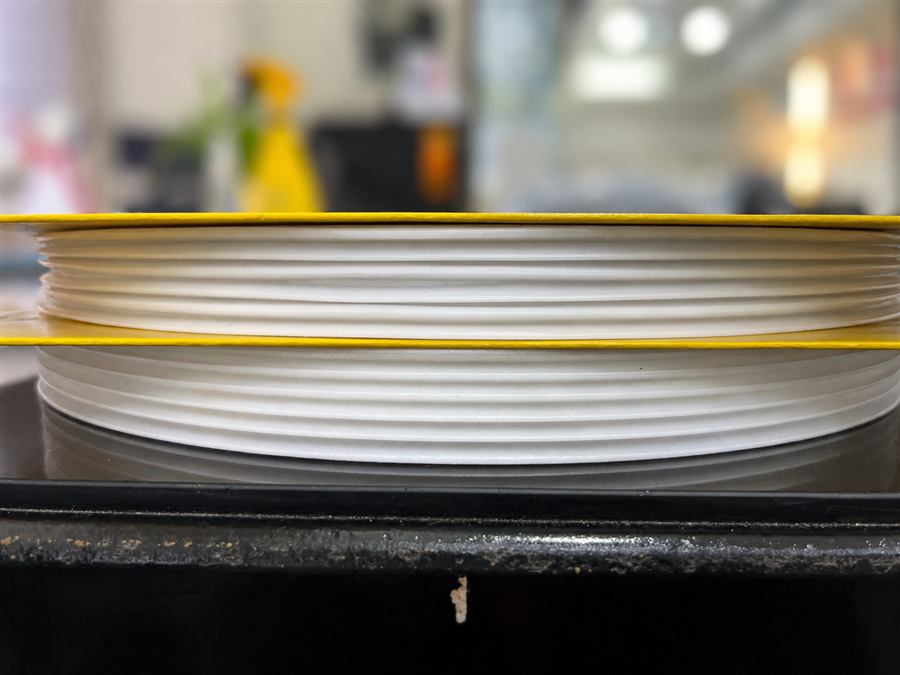
Case 1: Plastic Spool Weight-Reduction Test
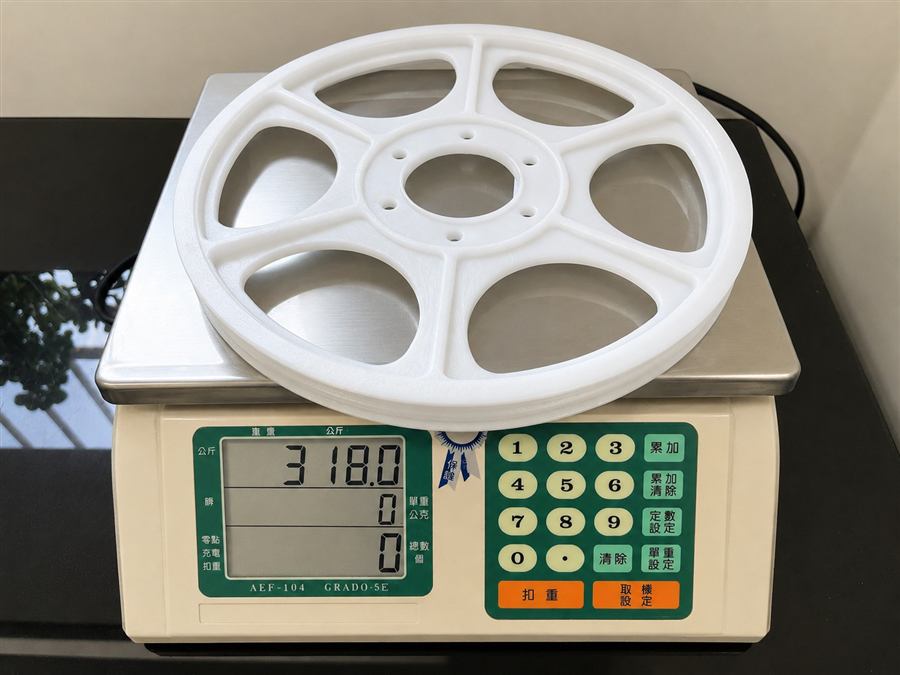 Without Nitrogen
0g
Without Nitrogen
0g
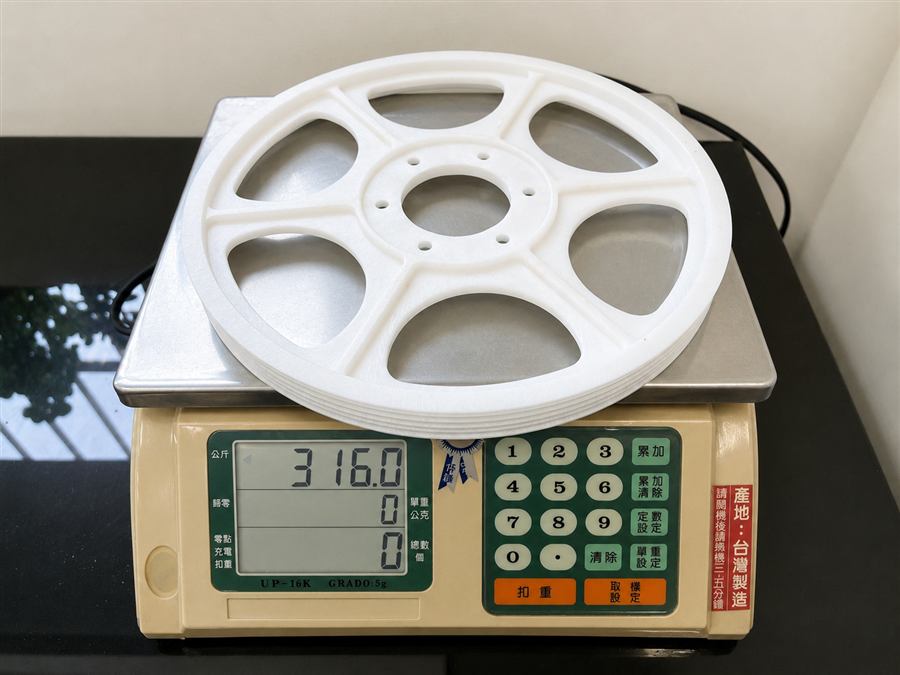 +50 kg/cm² Nitrogen
0g
+50 kg/cm² Nitrogen
0g
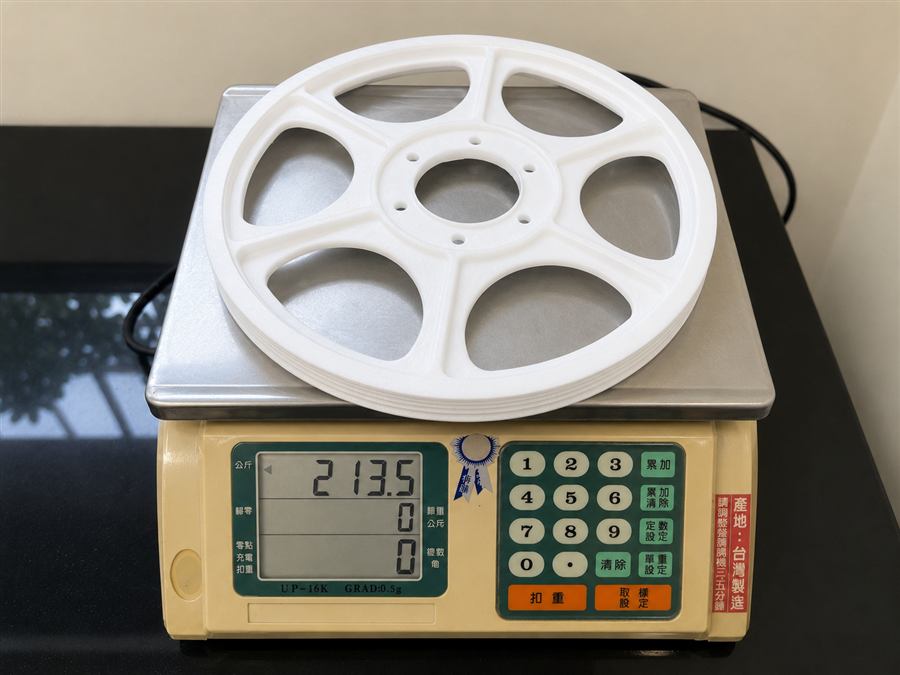 +150 kg/cm² Nitrogen
0g
Weight Reduced 0%
+150 kg/cm² Nitrogen
0g
Weight Reduced 0%
Case 2: Bushing Weight-Reduction Test
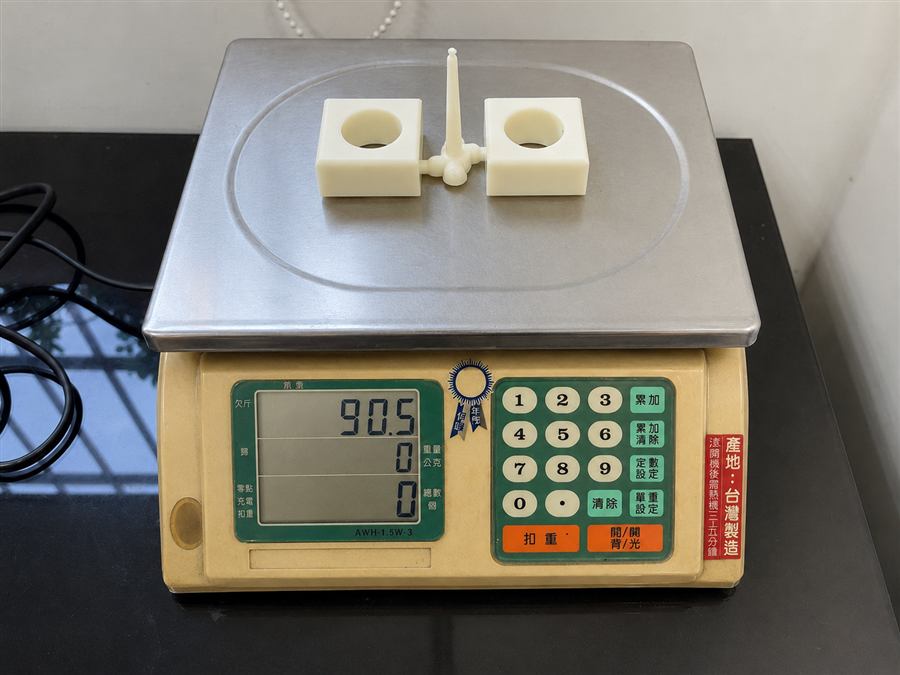 Before Foaming
0g
Before Foaming
0g
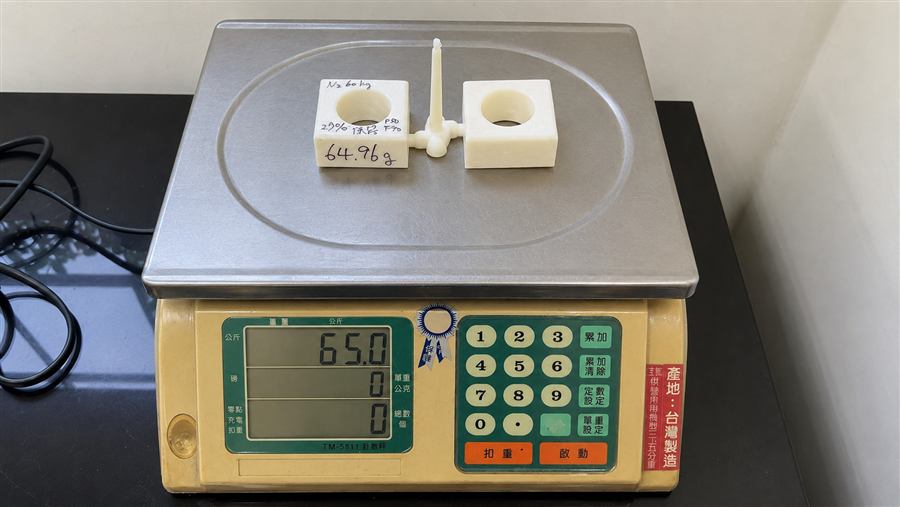 After Foaming
0g
Weight Reduction 0%
After Foaming
0g
Weight Reduction 0%
Foamed with nitrogen
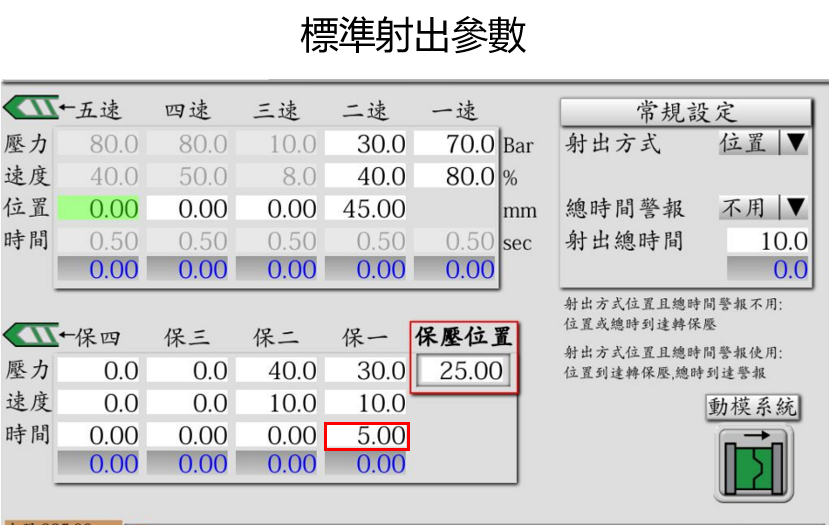
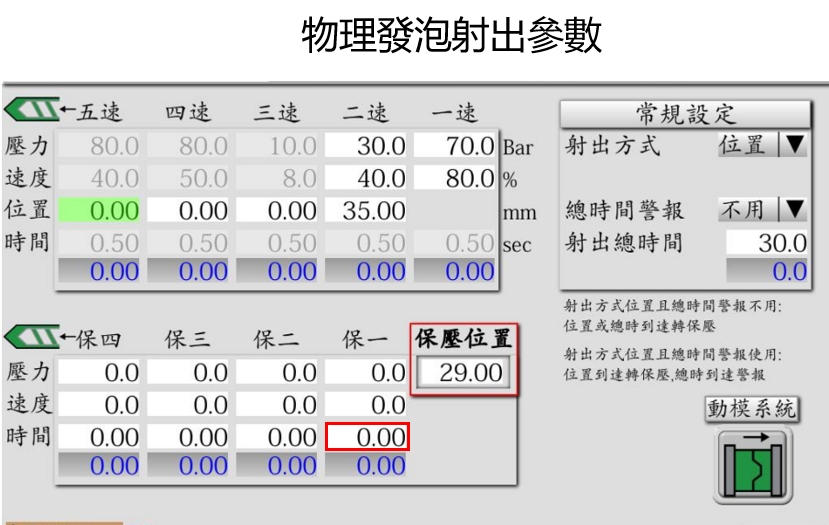
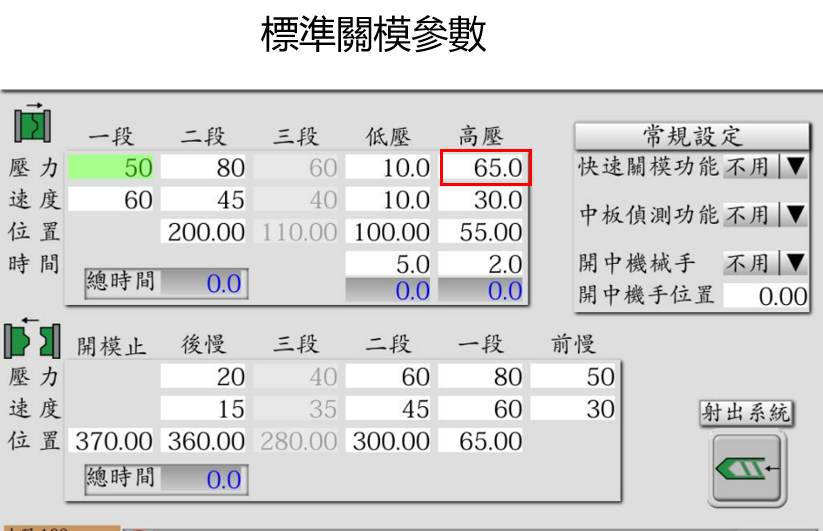
Process Parameter Comparison
- Holding Time Standard: 5 sec No Holding Required (0 sec) Holding Position Setting: 25 → 29
- Clamping Pressure Setting 65 Kg/cm² 20 Kg/cm²
- Cycle Time Standard Can Be Shortened in Some Applications
View Actual Machine Parameter Screens
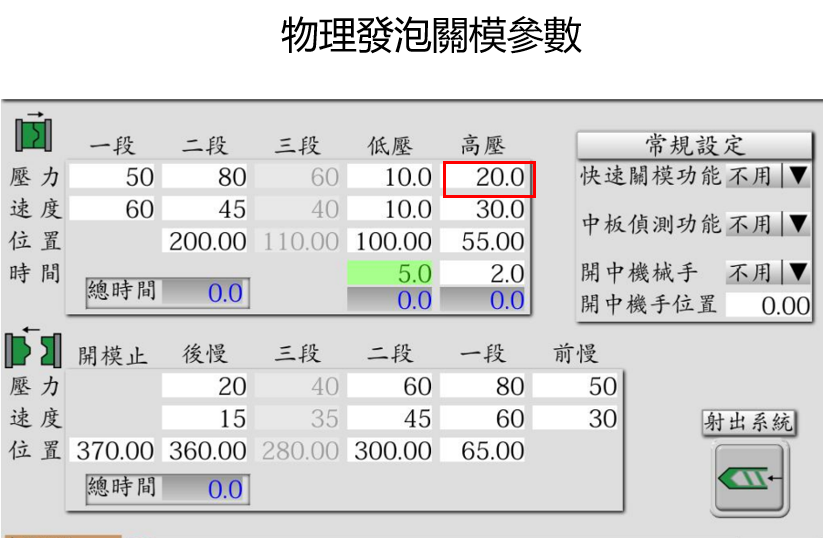
Comparison with Conventional Injection Molding
| Comparison Item | Conventional Injection Molding | Microcellular Foam Injection Molding |
|---|---|---|
| Dimensional Stability | More susceptible to warpage and deformation caused by uneven shrinkage | More stable and easier to control dimensionally |
| Holding-Pressure Requirement | Required | Can be reduced or eliminated |
| Clamping Force Requirement | Higher | Can be reduced by 30–50% |
| Part Weight | Standard weight | Approximately 15–20% lighter |
| Material Consumption | Fully solid filling | Reduced by approximately 10–20% |
| Cycle Time | Standard | Can Be Shortened in Some Applications |
| Equipment Requirements | Standard injection molding machine | Requires an SCF system and a dedicated plasticizing unit |
| Surface Appearance | Generally better | Silver streaks may occur and must be evaluated |
Swipe horizontally to view the full table
Industries and Materials
Microcellular foaming is particularly suitable for applications that require dimensional stability while also targeting lower weight and improved material efficiency.
Automotive Components
Instrument-panel carriers, door-panel interiors, and structural brackets.
Consumer Electronics
Laptop housings, tablet rear covers, and structural components.
Sporting Goods, Transportation, and Industrial Parts
Functional plastic components and packaging applications.
Suitable Applications
Problems It Can Improve
Commonly Applicable Materials
- PPGood cell-forming characteristics; widely used in automotive and consumer products
- PC / ABSSuitable for electronic housings and structural parts; foaming ratio and structural strength must be evaluated
- PA (Nylon)Glass-fiber-reinforced grades are commonly used in automotive and industrial parts
- Glass-Fiber-Reinforced MaterialsImproves stiffness and dimensional stability; cell structure and fiber distribution must be evaluated
- PCR Recycled MaterialsFeasible for selected applications, subject to viscosity and material-quality consistency
Material suitability must be evaluated based on appearance requirements, strength targets, and mass-production stability.
Before You Adopt: Situations Worth Discussing With Us First
Microcellular foaming is not suitable for every application. The following conditions require careful evaluation. Our engineering team can help determine technical feasibility:
Parts with Demanding Cosmetic Requirements
Silver streaks, flow marks, or reduced gloss may occur. Parts with demanding cosmetic requirements may require secondary finishing.
Highly Transparent Parts
The cellular structure affects optical clarity, so the process is generally unsuitable for highly transparent parts.
Very High Strength Requirements
For parts with very high strength requirements, the foaming ratio, material grade, and part structure must be validated through testing before mass production.
Low-Volume or Budget-Constrained Projects
Adoption requires integrated investment in equipment, the SCF module, mold modifications, process development, and training. It may not be cost-effective for very small production runs or short-term pilot production.
Adoption Cost Structure
- 01Equipment Purchase and Modification
- 02Mold Development and Mold Trials
- 03Process Development
- 04Operator and Technical Training
Not sure whether your product is suitable? Share your requirements and our engineering team will provide an initial feasibility assessment.
Send an InquiryMachine Specifications
The current flagship model is the HRF-200 microcellular foam servo-hydraulic injection molding machine (200 tons). Additional HRF models will be introduced in other tonnage ranges according to market demand.
| Item | Unit | Value |
|---|---|---|
| Screw Dimension | mm | 42 |
| Injection Pressure | kg/cm² | 2285 |
| Shot Volume | cm³ | 311 |
| Shot Weight (PS) | g / oz | 283 / 10 |
| Injection Speed | mm/sec | 122 |
| Injection Rate | cm³/sec | 169 |
| Clamping Force | Tons | 200 |
| Tie Bar Distance (H×V) | mm | 505 × 505 |
| Opening Stroke | mm | 465 |
| Mold Thickness | mm | 130–520 |
| Mold Platen (H×V) | mm | 715 × 715 |
| Ejector Stroke | mm | 140 |
| Mold Hole | mm | 100 |
| Servo Motor | kW | 25 |
| Heating Zones | Zones | 6 |
| Total Heating Wattage | kW | 17.57 |
| System Pressure | kg/cm² | 140 |
| Oil Capacity | L | 340 |
| Machine Dimension (L×W×H) | m | 6 × 1.4 × 1.9 |
| Machine Weight | Tons | 6.2 |
Why Choose Huarong Group
40+ Years of Manufacturing Experience
The Huarong, Nanrong, and Yuh-Dak brands provide a comprehensive portfolio of horizontal, vertical, and multi-shot injection molding machines.
System Integration Expertise
We integrate SCF systems, process implementation, and supporting equipment rather than supplying only a standalone machine.
Application Feasibility Support
We evaluate technical feasibility and implementation planning based on your product requirements.
Automation and Smart Manufacturing
The system can be integrated with automation peripherals and smart production-management solutions.
End-to-End Support from Engineering to Mass Production
- Technical Evaluation
- Equipment Configuration
- Process ImplementationMold trials, parameter optimization, and production stabilization
- Long-Term SupportTraining, technical consultation, and automation integration upgrades
Certifications
Would You Like to Evaluate Whether Microcellular Foaming Is Suitable for Your Product?
Whether you are evaluating a new process, pursuing a lightweighting solution, or seeking greater production efficiency, our engineering team can help define your requirements and identify the most suitable technical approach.
Send an InquirySend an Inquiry
Complete the form below and our engineering team will contact you as soon as possible.
Thank You for Your Inquiry
Thank you for your inquiry. Our engineering team will contact you as soon as possible.